Little Red Riding Hood


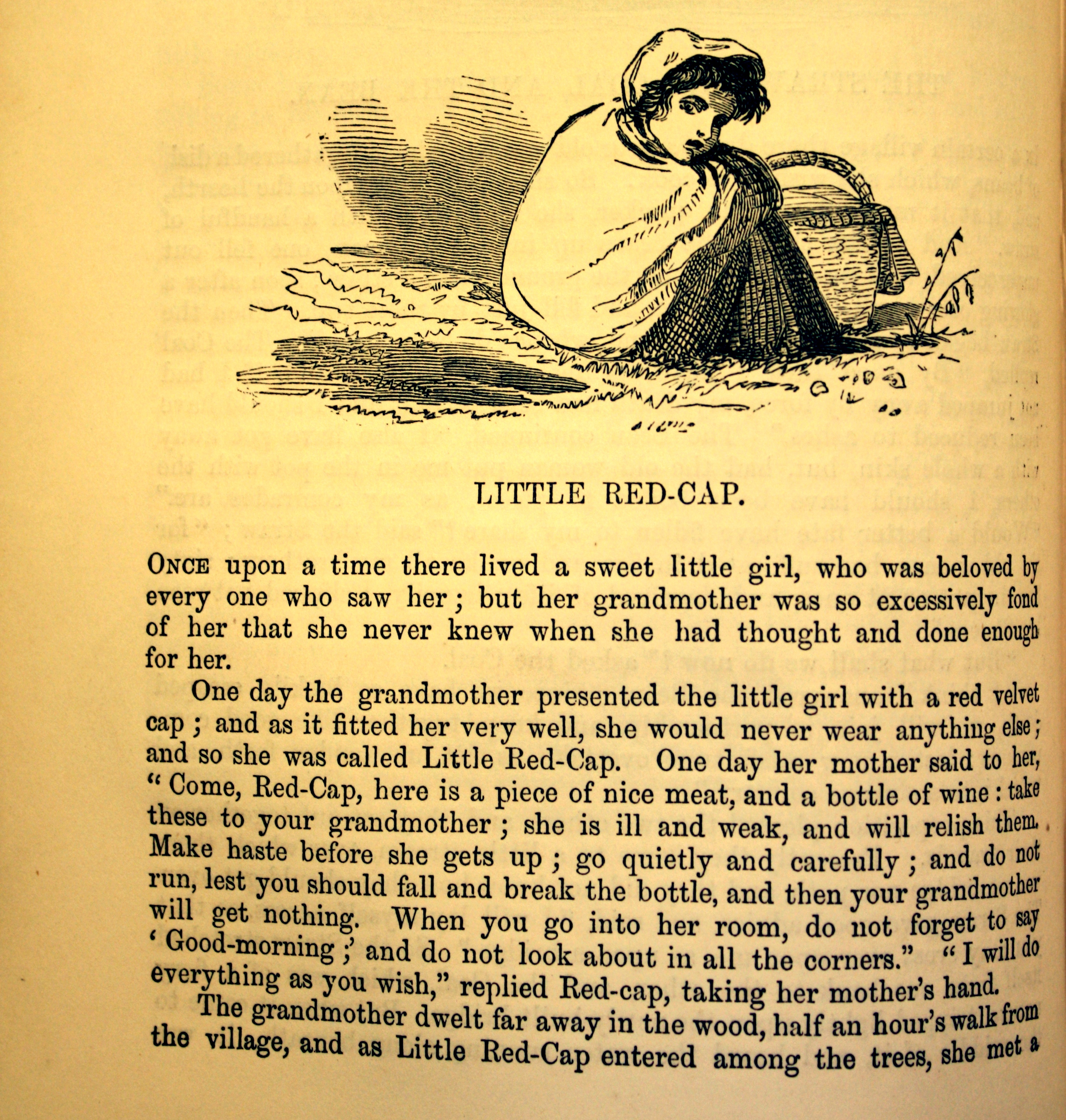
The Grimms’ first edition of Children’s and Household Tales, published in two volumes in 1812 and 1815, was intended to be a reference text for those interested in researching German folk-tales. It became rapidly apparent, however, that the potential for commercial success lay in the children’s literature market opposed to the scholastic. Subsequent editions and translations of the text moved increasingly away from the Grimms’ initial focus of preserving oral folk-tales in their original form, and the stories were comprehensively edited and censored to make them suitable for childish, and parental, consumption.
The version of
Whether this dual aspect of the tale was intended by the authors is unknown, yet when compared to earlier versions, this Victorian rendition of the tale is notably devoid of overt sexual references: Little Red Cap does not disrobe for the wolf, nor does she join him in her grandmother’s bed. The focus on the family unit’s responsibility for moral guidance is perpetuated further by the hunter who kills the wolf at the end of the tale, thus fulfiling the patriarchal role of eliminating the predator and the threat it poses, although he is ultimately too late to save Little Red Cap. By identifying the wolf as the
The Grimms’
